

How your electrical panel works
A plain-language tour of the box that powers everything — what's inside, how power flows, and the warning signs worth calling about.
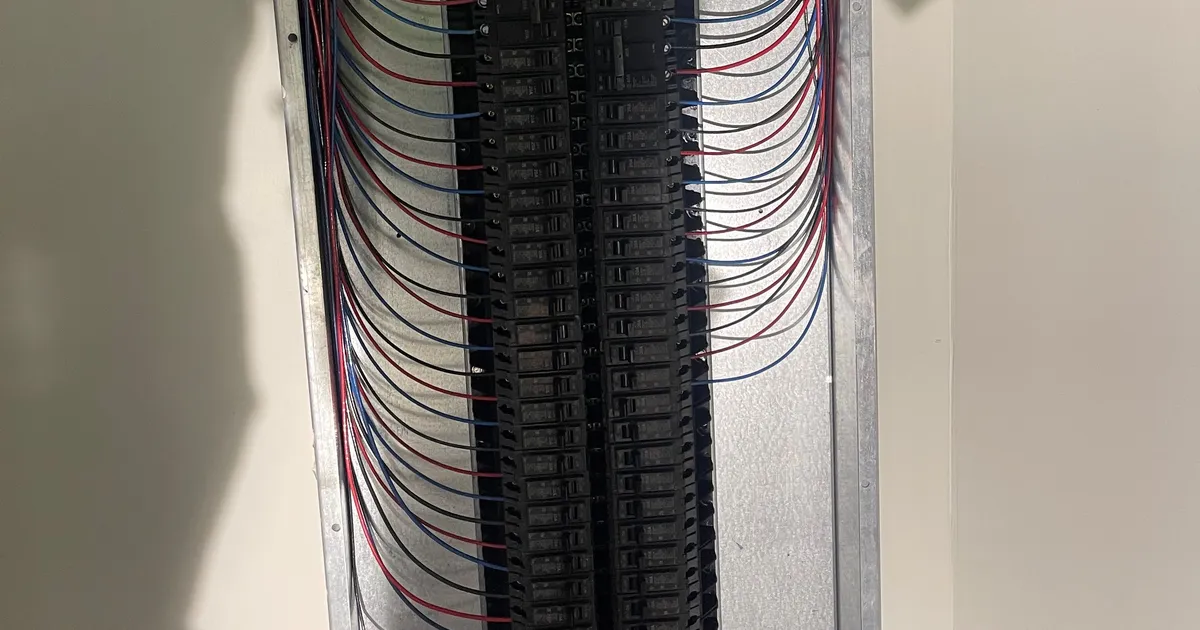
Your electrical panel — the “breaker box” — is the single point where power from the utility is split up and sent to every circuit in the building. Knowing roughly how it works makes it a lot easier to tell a minor nuisance from a real problem.
How power flows
Power arrives from the utility, passes through your meter, and enters the panel at the main breaker. From there it runs across two bus bars, and each branch breaker taps off the bus to feed one circuit — a room, an appliance, or a piece of equipment.
Each breaker is a safety device. If a circuit draws more current than it’s rated for — from an overload or a short — the breaker trips and cuts power before the wiring can overheat. That’s the system working as designed.
What the parts do
- Main breaker — shuts off power to the whole panel; also its overall amperage rating (100A, 200A, and so on).
- Bus bars — the metal strips that carry power across the panel.
- Branch breakers — one per circuit; sized to the wire they protect.
- Neutral / ground bars — the return and safety paths for current.
Warning signs worth a call
- Breakers that trip repeatedly or won’t reset
- Warmth, buzzing, or a scorched smell at the panel
- Rust, corrosion, or scorch marks inside
- An obsolete or flagged brand (see our Safety Bulletin)
- Not enough capacity for what you run today
If you spot any of these, it’s worth having the panel looked at. A panel upgrade is also the first step for big new loads like an EV charger, a heat pump, or shop equipment.
Heads up: the inside of a panel stays energized even with the main breaker off. Leave the cover on and the work to a licensed electrician.