EV charging
EV Charger Installation in Bakersfield, CA
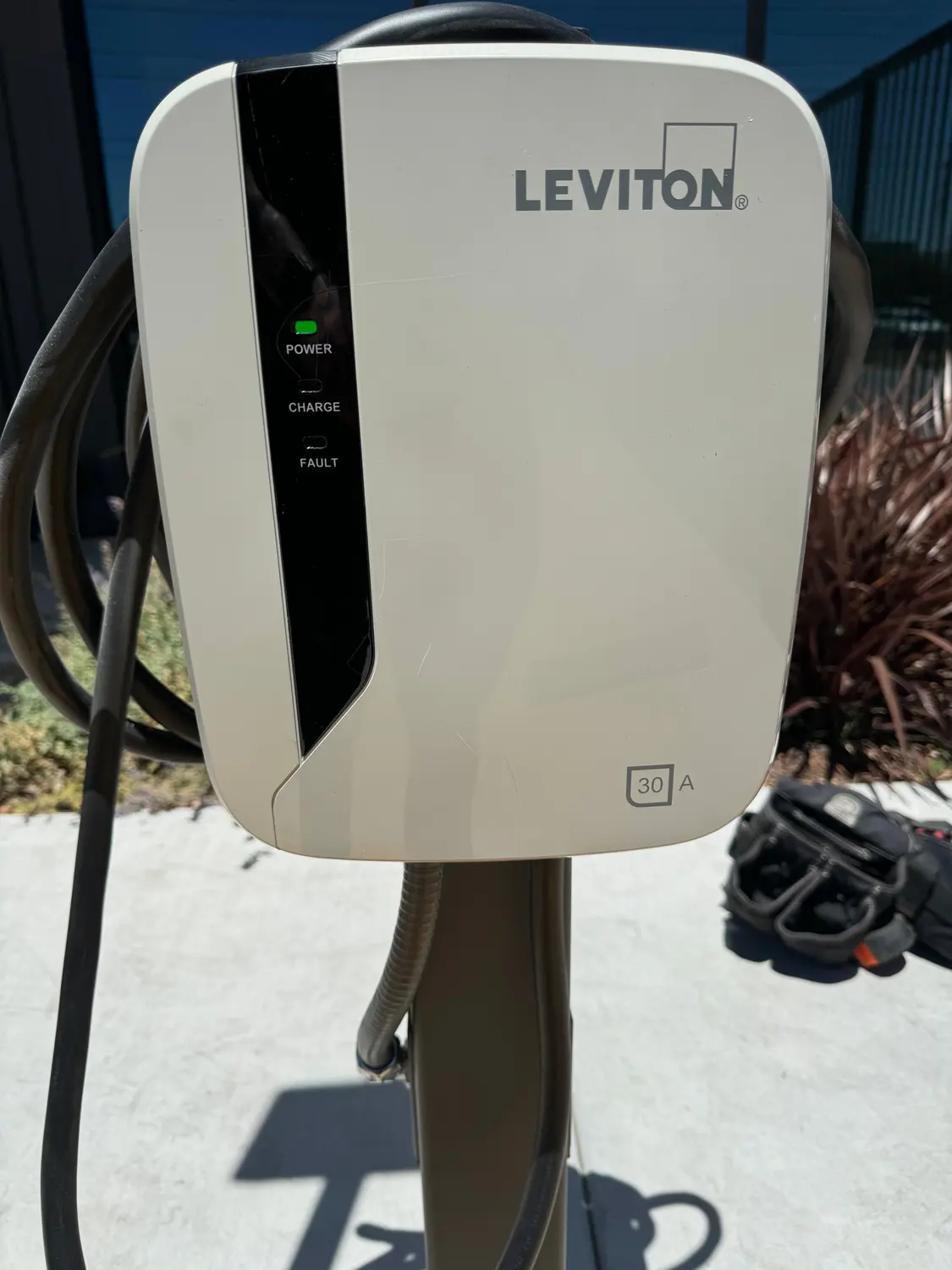
A Level 2 charger is one of the largest continuous loads most homes will ever add, which is why the install is an electrical job before it is a charger job. Blake's Electrical LLC — a licensed California C-10 contractor, CSLB #1159494 — installs home EV chargers and commercial charging stations across Bakersfield and Kern County, starting with whether your panel can carry one.
Licensed California C-10 Electrical Contractor · CSLB #1159494
What this covers
- Level 2 (240V) home charger installation
- Hardwired and NEMA 14-50 outlet installs
- Panel capacity assessment and load calculation
- Dedicated circuits sized for continuous load
- Service or panel upgrades where capacity is short
- Commercial and multi-unit charging stations
- Load management where capacity is limited
- Garage, carport and exterior installations
- Permits and inspection
Start with the panel, not the charger
A Level 2 charger typically wants a 40 or 60 amp circuit and will draw on it for hours at a stretch. Code treats that as a continuous load, which means the circuit has to be sized to 125% of the charger's draw — a 48 amp charger needs a 60 amp circuit, not a 50.
That is the load the panel has to absorb on top of everything already on it. On a 100 amp service with central air, the answer is often that there is not room without either an upgrade or load management. Knowing which of those applies to your house is a fifteen-minute conversation and a load calculation — and it is much cheaper to have it before the charger is bought.
Home installations
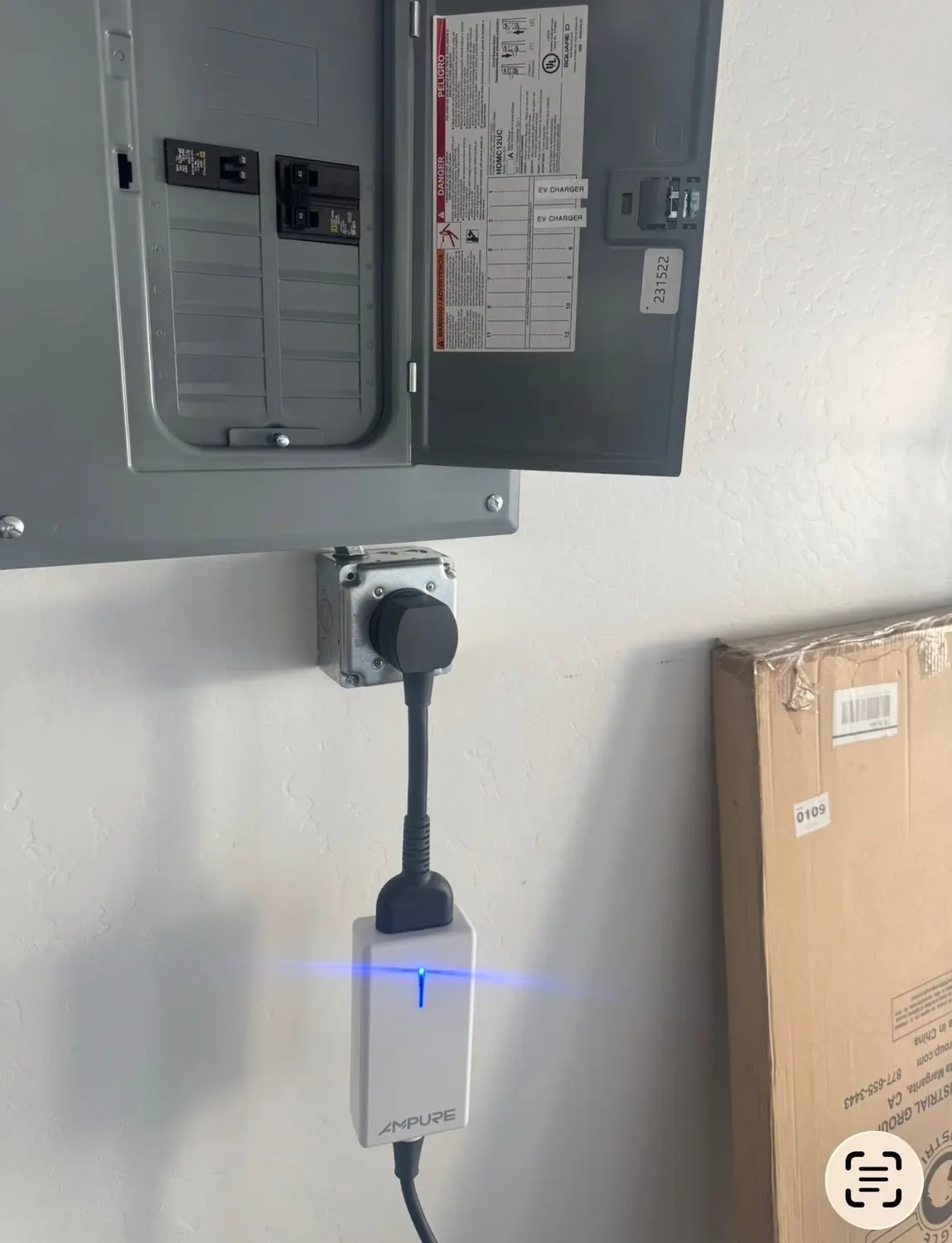
Most home installs are a dedicated 240V circuit from the panel to wherever the car parks — garage wall, carport, or an exterior wall. The two common terminations are a hardwired charger or a NEMA 14-50 receptacle, and the choice matters more than it looks.
Hardwiring supports higher continuous current and avoids the receptacle as a wear point, which is where cheap 14-50 outlets fail under repeated heat cycling. A receptacle is more flexible if you expect to take the charger with you. We will fit either; we will tell you which one your situation argues for.
- Dedicated 240V circuit sized for continuous load
- Hardwired charger or NEMA 14-50 receptacle
- GFCI protection as required by code
- Conduit run kept short and square — the run length affects the wire size
- Permit and inspection handled
Commercial and multi-unit charging
Workplace, retail and multi-family charging is a different problem: several chargers, a shared service, and a load that all arrives at once. Sizing the service for every charger at full output is usually neither necessary nor affordable.
Load management — where the chargers coordinate and share a fixed capacity — is often what makes a site feasible on the service it already has. We size and install the distribution for commercial charging, and coordinate with whatever charging hardware and network the site has chosen.
Permits, and why they are worth having
EV charger circuits are permitted work. Beyond the legal position, the permit and the inspection are the record that the circuit was sized and installed correctly — which matters when the house is sold, when an insurer asks after a fire, and when a rebate or incentive program requires proof of a permitted, code-compliant installation.
Some utility and state incentives for charging equipment require exactly that documentation. Our Financial Assistance page tracks the programs that can help pay for electrical work.
Common questions
Related services
Panel & Service Upgrades
100 to 200 amp service upgrades, panel replacement, sub-panels and load calculations — permitted, inspected and coordinated with the utility.
Read moreResidential Lighting
Recessed lighting, under-cabinet and accent lighting, fixture and chandelier replacement, dimmers and smart controls, and LED retrofits for homes across Kern County.
Read moreRepair & Troubleshooting
Breakers that keep tripping, flickering lights, dead outlets, burning smells — traced to the actual fault and repaired, day or night.
Read moreNeed a quote for ev charger installation?
Call (661) 677-9900 or send the details and we'll come back to you with a real number. 24/7 emergency service across Bakersfield and Kern County.